
Private Security in SF’s Special Districts: Presidio, Golden Gate Park, and Treasure Island
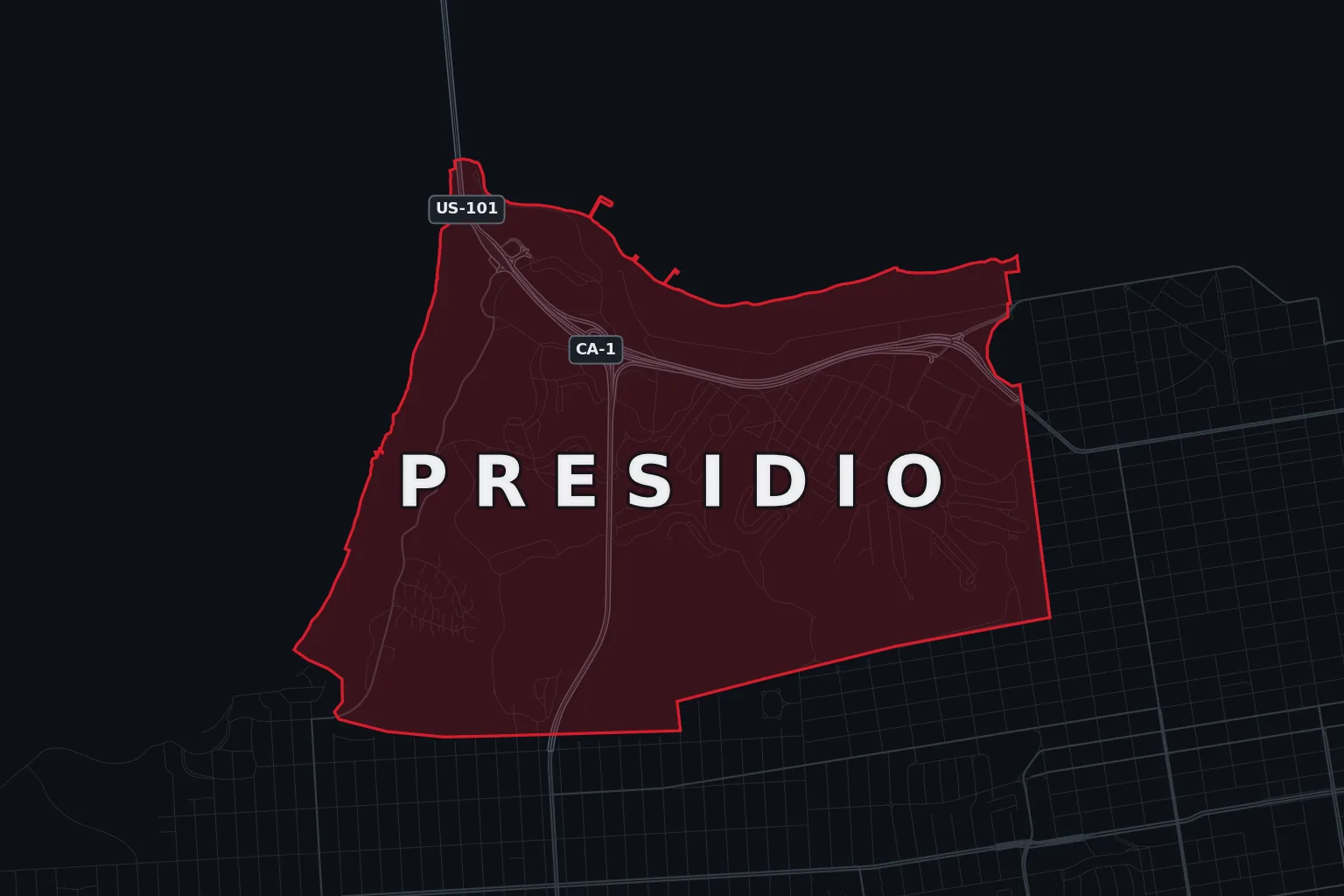
Three Districts, Three Governments
Most of San Francisco sits on ordinary city land: SFPD responds, city codes apply, and a security plan written for SoMa works in the Marina. Three of the city’s most distinctive areas do not work that way, and a property or event manager who treats them as ordinary neighborhoods will hit friction fast.
| District | Land status | Managing body | Law enforcement |
|---|---|---|---|
| Presidio | Federal parkland | Presidio Trust | US Park Police |
| Golden Gate Park | City land | SF Recreation & Parks | SFPD and park rangers |
| Treasure Island | Former naval station under redevelopment | Treasure Island Development Authority (TIDA) | SFPD |
The differences are practical, not academic. Who approves your event security plan, who responds when your guard calls in a crime, whose rules govern your leasehold, and what your insurance certificate must say all change with the ground under your feet. AMB covers all three among our 35 San Francisco coverage zones, and the post orders for each read differently on the first page.
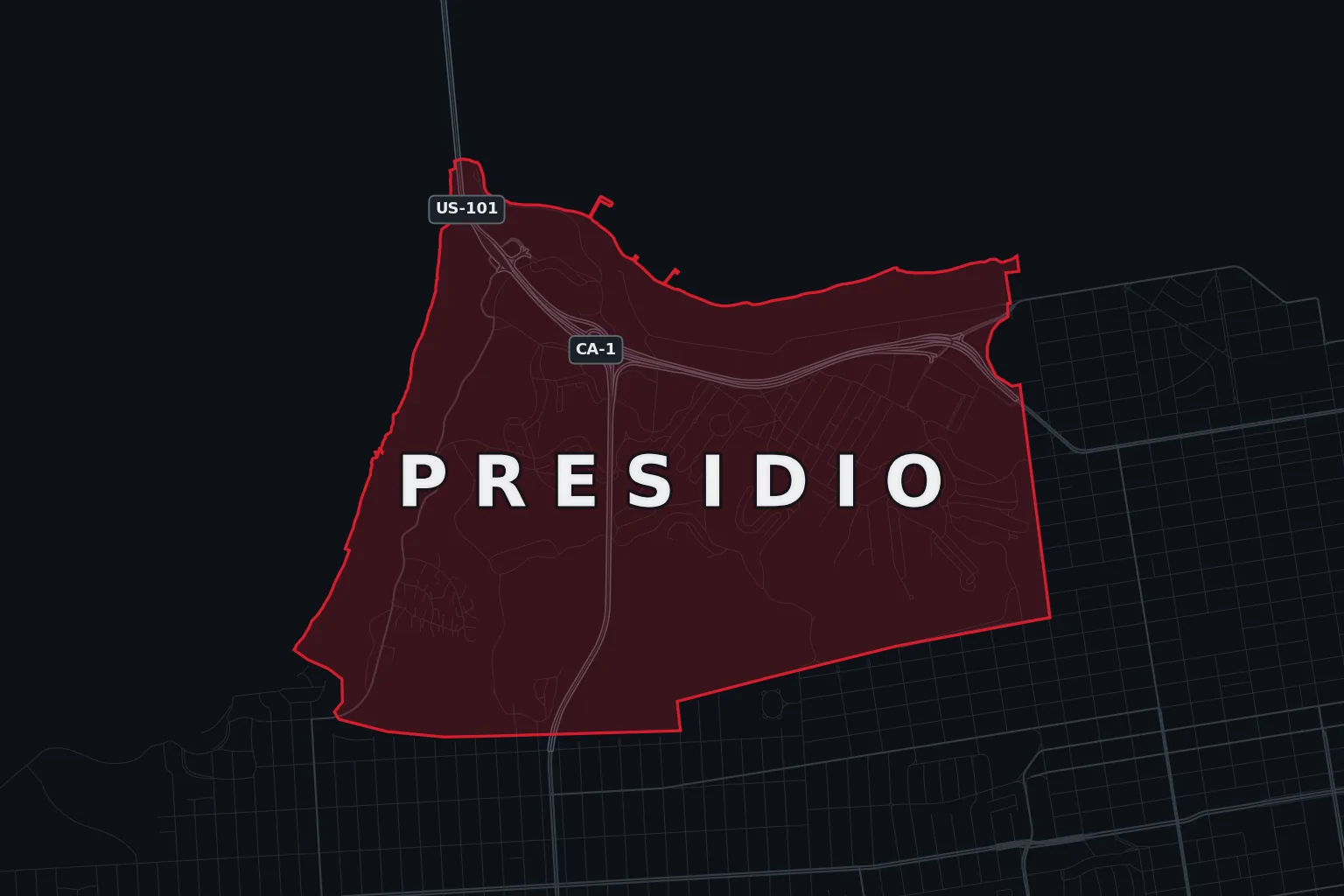
What Can Private Security Legally Cover There, and What Can’t It?
The short version: private security protects private interests on these lands, and public safety stays public.
Private officers can be posted to:
- Leaseholder premises. The Presidio contains homes, offices, hotels, and commercial tenants under Presidio Trust leases; Treasure Island has residential and commercial leaseholds under TIDA. Within the leased premises, security works much as it does anywhere: access control, patrols, incident documentation.
- Permitted event footprints. When an event permit defines a venue area (a festival site, a wedding lawn, a gala tent) private security can control access and manage the crowd within that footprint for the permit’s duration.
- Construction parcels. A fenced construction site is the contractor’s to secure, whichever agency manages the surrounding land.
What stays with the public agencies: general patrol of park grounds, enforcement of park rules on public land, detentions and arrests beyond what any private citizen may do, and all law enforcement response. US Park Police in the Presidio, SFPD and rangers in Golden Gate Park, SFPD on Treasure Island. A private officer’s role there is professional observation, deterrence through presence, and a fast, well-documented handoff. Our officers carry BSIS Guard Cards and body-worn cameras precisely because in these districts, the quality of your documentation is the value you hand the responding agency.
Event Security: Festivals, Weddings, and Galas
These three districts host a disproportionate share of San Francisco’s signature events, festival weekends in Golden Gate Park, weddings and corporate retreats at historic Presidio venues, galas at cultural institutions. Event security here has a paperwork phase and an execution phase, and the paperwork phase is where inexperienced providers stall.
Before the event: venue managers and permitting bodies routinely require proof that your security provider is licensed and insured. Expect to furnish the provider’s BSIS Private Patrol Operator license number (AMB’s is PPO #16681) and a certificate of insurance, we carry $3M in general liability and issue COIs naming venues and land managers as required. Security staffing is often a condition of the permit or venue contract itself, so engage the provider before the plan is submitted, not after.
During the event: the work is access control at the footprint boundary, guest list and credential checks, vendor load-in supervision, protection of staging and equipment overnight between event days, and calm crowd management, the wedding version and the festival version differ in scale, not in kind. Every AMB event post runs on written post orders that name which agency gets which call, because at a Presidio venue that answer is US Park Police, and guessing wrong wastes minutes.
Museums and Cultural Properties
Golden Gate Park’s museum concourse and the Presidio’s cultural and institutional tenants present a security profile unlike either an office or an event: irreplaceable contents, high daytime visitor volume, and long quiet nights.
Private security supports these properties in four recurring ways. After-hours events, donor evenings, rentals, member previews, need staffing that understands both hospitality and collection protection: guests everywhere, and certain doors that stay controlled no matter what. Queue and perimeter management during blockbuster exhibitions keeps lines orderly on the property’s own frontage while public land management remains with rangers and Rec & Parks. Collection moves and installations call for documented, continuous presence while cases are open and objects are in transit between truck and gallery. And overnight coverage pairs interior or perimeter patrols with alarm response. AMB’s response typically arrives in 15 to 30 minutes across San Francisco, which matters at 3 a. That figure is our own measurement: our dispatch app logs it from the moment a request comes in to the moment an officer is recorded on site.m. When a motion alarm in a gallery needs eyes on it before anyone decides it was a false trip.
Documentation discipline is the through-line: daily activity reports and logged rounds give registrars, insurers, and boards the audit trail cultural institutions are accountable for.
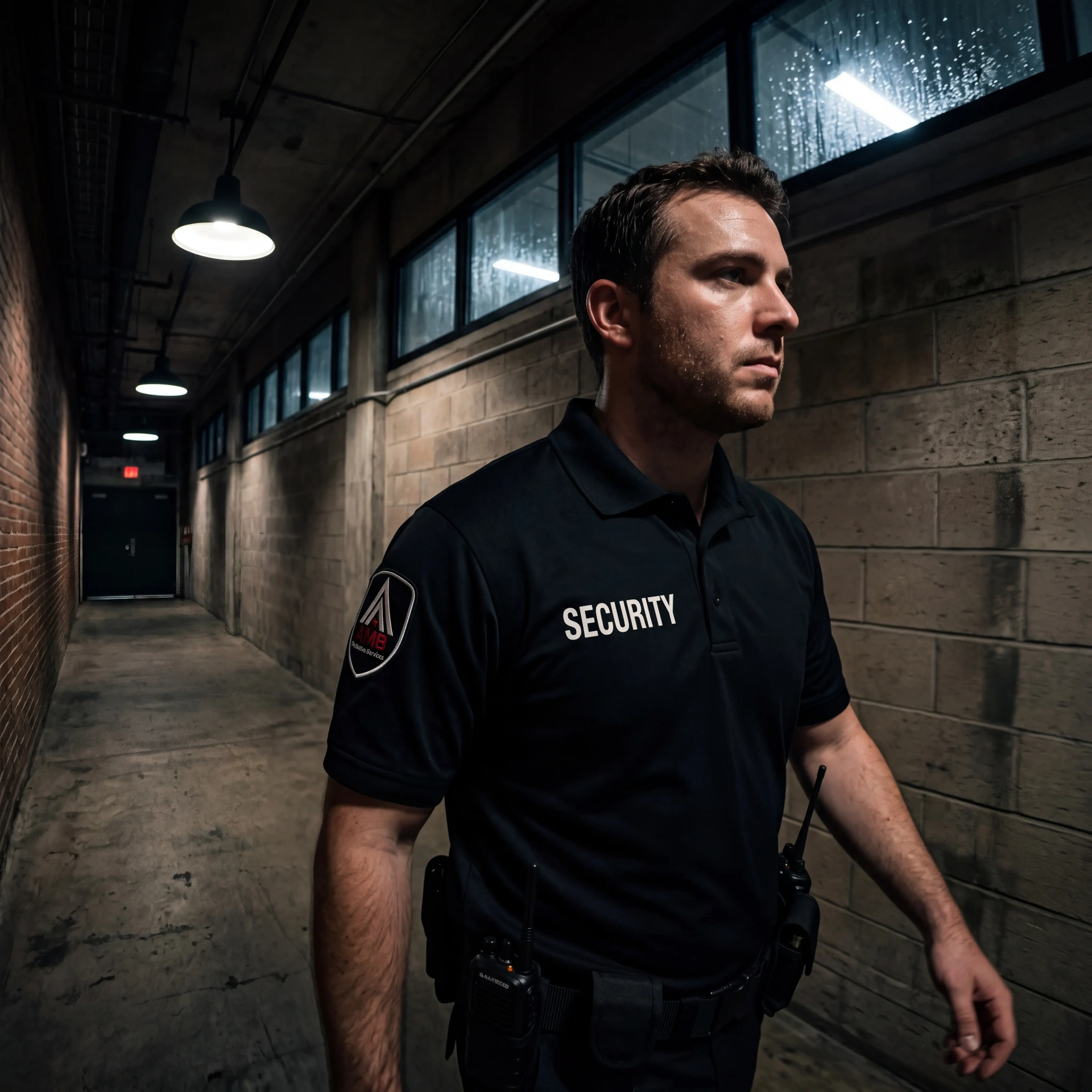
Construction on Treasure Island
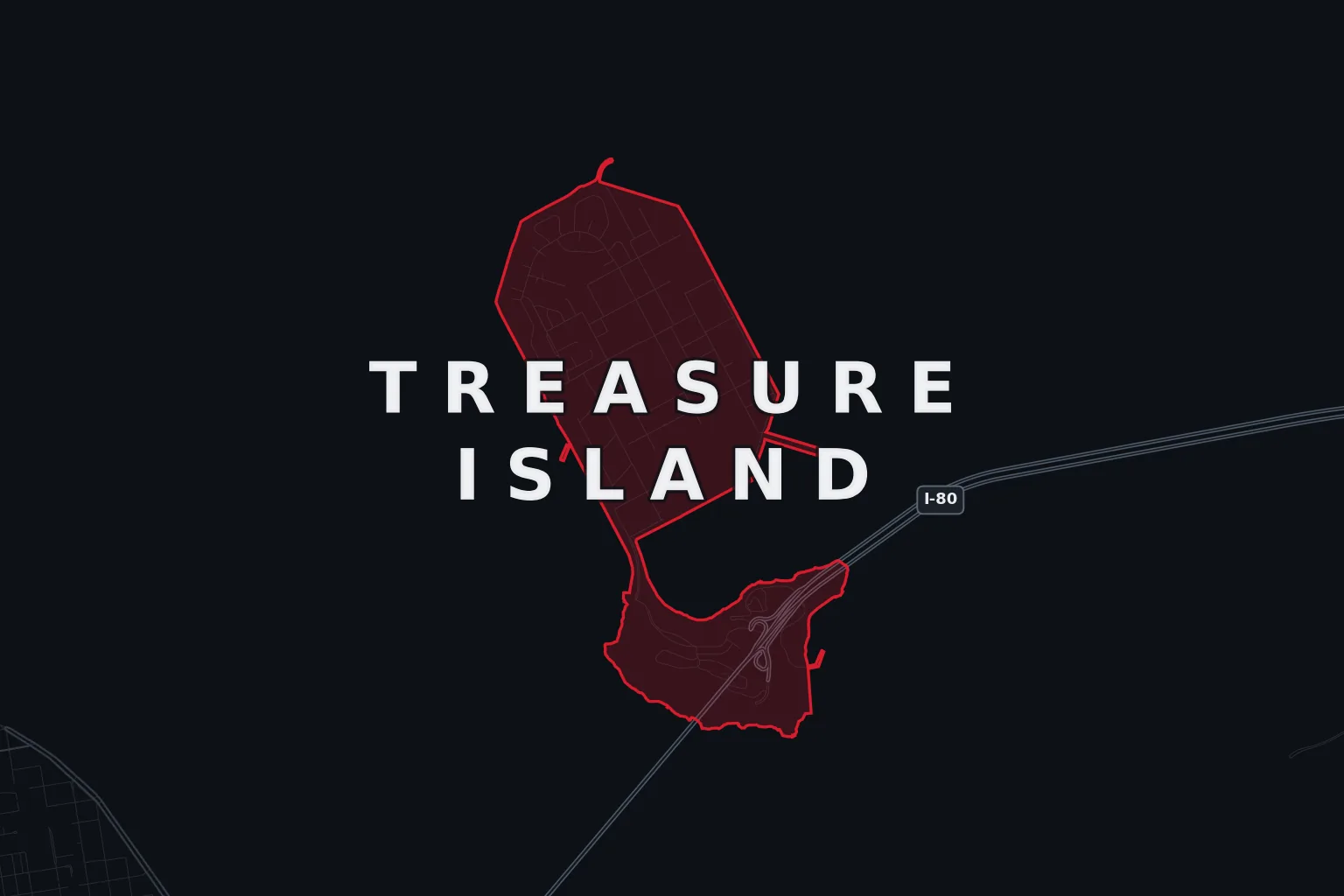
Treasure Island is the largest redevelopment effort in San Francisco, and it is a genuinely unusual security environment. The land is managed under TIDA, construction parcels sit alongside occupied residential blocks, and everything arrives and leaves through a single vehicle connection to the Bay Bridge.
That single access point defines the security logic. A gate-focused post controls what would take an entire fence-line program to control on a mainland site, every material delivery, every fleet vehicle, every after-hours visitor passes one checkpoint. The flip side is isolation: after dark the island is quiet, incidental witnesses are few, and a response that starts from the mainland crosses the bridge to get there. Coverage that is actually on the island (a standing post, or mobile patrol rounds that are GPS-verified and photo-logged so a project manager on the mainland can see them) is worth more here than almost anywhere else in the city.
Construction on the island also carries the standard fire watch obligations: buildings with sprinkler and alarm systems not yet commissioned, and hot work, can require dedicated fire watch coverage with continuous documented rounds under SFFD requirements. For phased projects, we scope security and fire watch together, the staffing overlaps, and the documentation should live in one place.
Vehicle Break-Ins at Visitor Lots
Anyone who manages a venue or leasehold near a San Francisco attraction knows the pattern: visitors park, leave bags visible, and return to broken glass. Lots serving park attractions, trailheads, scenic overlooks, and event venues are natural targets because the vehicles are predictably unattended for predictable windows, and the people breaking into them can see exactly who walked away from what.
Enforcement on public roads and public lots belongs to US Park Police, SFPD, and rangers, depending on the district. But where a lot is part of a leasehold or an event footprint (a venue’s parking area, a museum event’s designated lot, a construction staging lot) private security can materially change outcomes:
- Visible presence during high-risk windows. Break-in crews work fast and prefer empty lots; a uniformed officer or a marked patrol vehicle removes the emptiness.
- Randomized patrol rounds, GPS-verified and photo-logged, so coverage is provable and timing is not learnable.
- Guest-facing prevention: signage and, at events, staff reminding guests not to leave visible valuables. Unglamorous, and effective.
- Clean incident handling when a break-in does occur: documented scene, body-camera record, prompt report to the correct agency, and a written account the vehicle owner’s insurer can actually use.
How Coordination With Public Agencies Actually Works
The difference between a security provider that functions in these districts and one that merely stands in them is whether the coordination is built into the paperwork before anything happens.
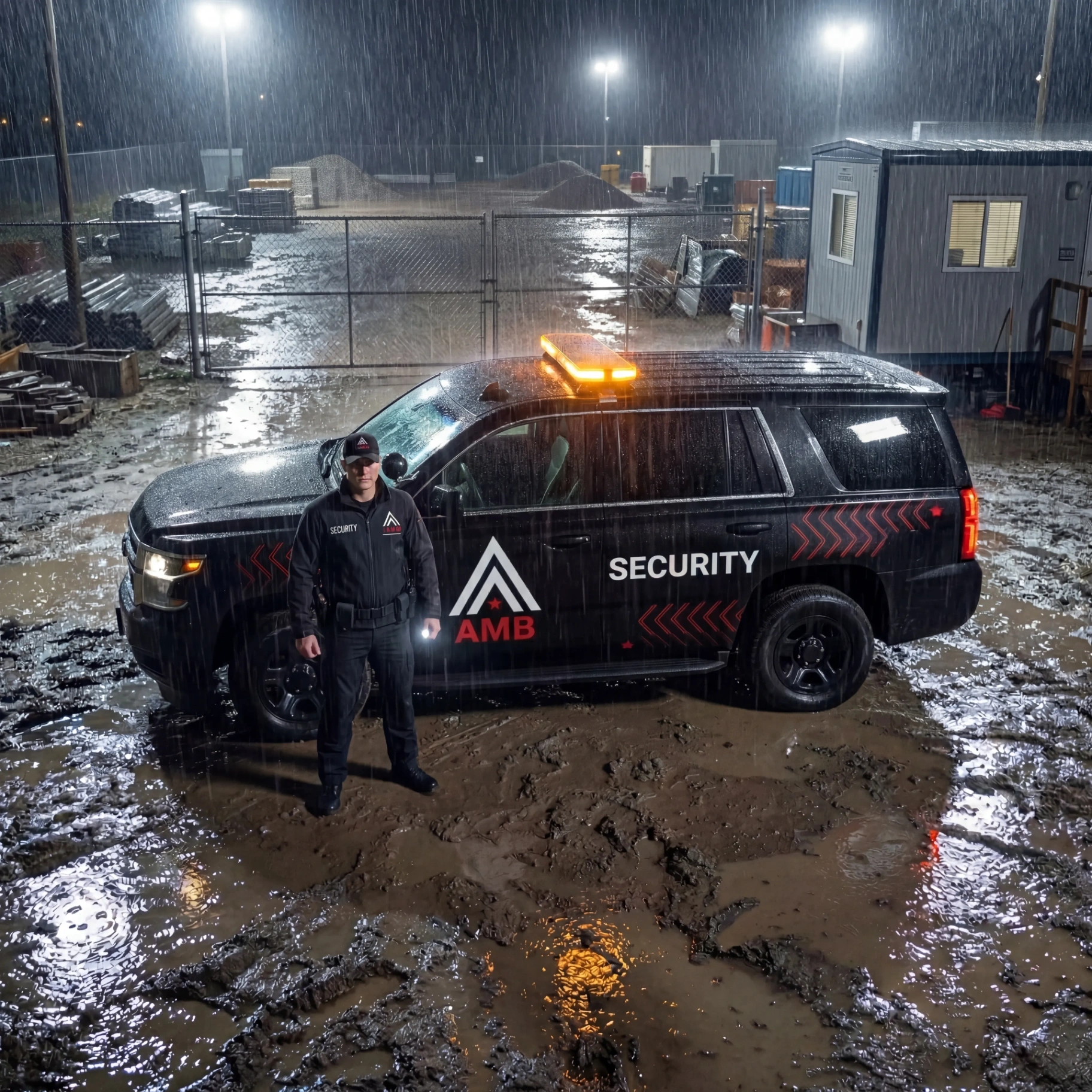
In practice it looks like this. Every post order names the correct responding agency for its ground (US Park Police for a Presidio venue, SFPD and rangers for Golden Gate Park, SFPD for Treasure Island) with the right contact paths, so an officer at 2 a.m. Is executing a procedure rather than making a judgment call about jurisdiction. Officers are briefed on where the leasehold or permit footprint ends, because confidently overstepping onto public land is the classic private-security failure in a park setting. When an incident crosses the line (a crime in progress, an injury, anything requiring enforcement) the handoff is immediate, and what we contribute is what private security legitimately owns: trained witnesses, body-camera footage, logged timelines, and a daily activity report the property manager and the agency both receive.
Behind that sits infrastructure: AMB’s dispatch runs 24/7 at 415-990-5001, alarm response across San Francisco typically arrives in 15 to 30 minutes, and we have operated on this city’s complicated ground since 2010. In the Presidio, Golden Gate Park, and Treasure Island, knowing exactly whose land you are standing on is not trivia, it is the job.