
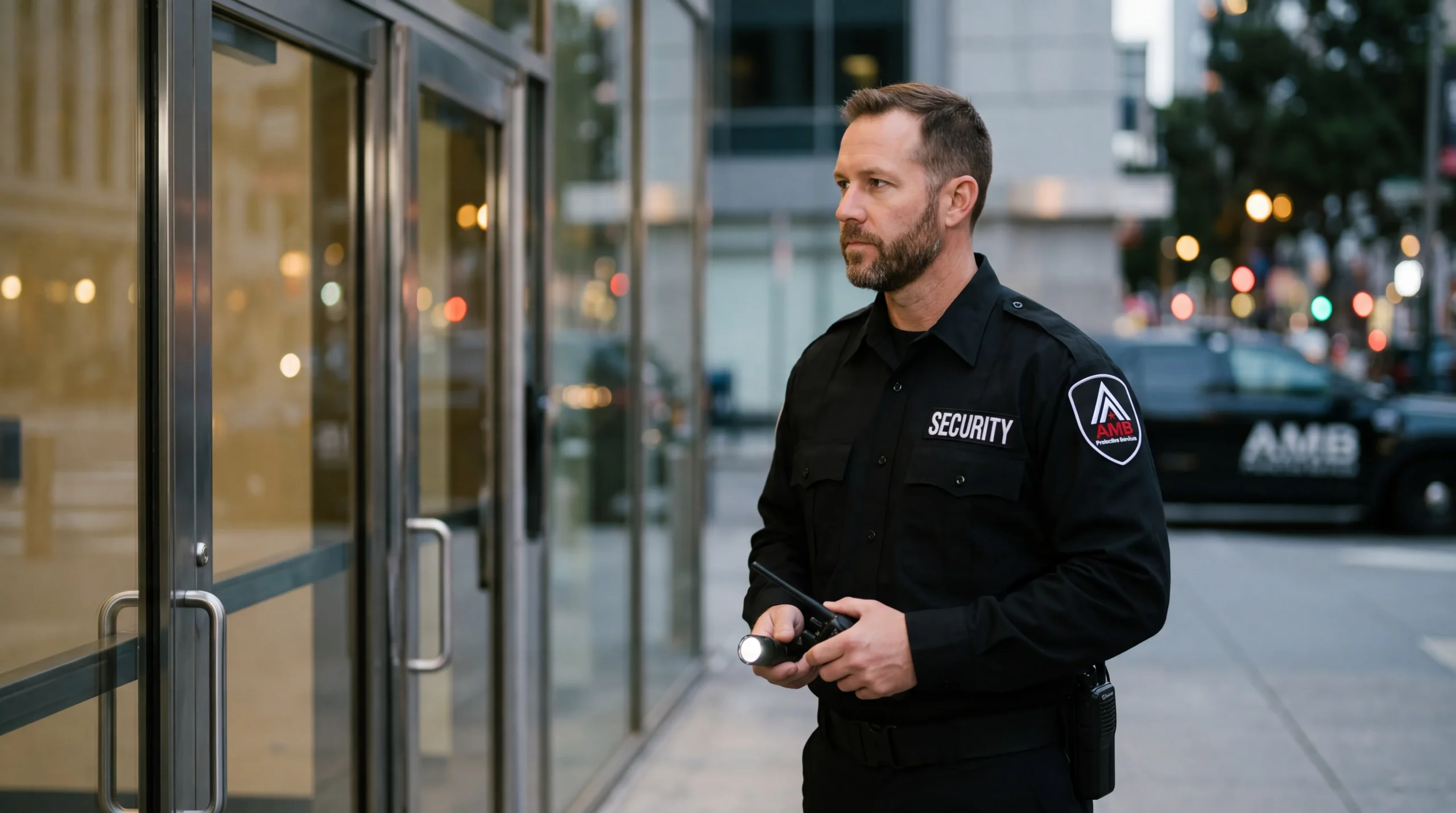
San Francisco does not have one security problem. It has a different one on every few blocks, and the mistake most operators make is buying coverage designed for the city in general rather than for the ground their building actually sits on.
The open police record makes that concrete. Everything below comes from SFPD Police Department Incident Reports published on DataSF, for the twelve months to September 2026.
The numbers are not evenly spread
SoMa logged 7,557 criminal incidents over that year — the heaviest load of any district AMB covers — led by drug-related reports, then 909 shoplifting cases. The Mission logged 9,135. Union Square straddles two reporting districts that together recorded 11,291. At the other end, Glen Park recorded 245 and Treasure Island 189.
A property in the Financial District and a property in Noe Valley are not buying the same thing, and they should not be sold the same thing. In Noe Valley the two largest lines are theft — 171 shoplifting reports and 145 other larceny, the category that covers parcels taken from open stoops. That is a daytime problem. Three miles north, the problem is a lobby that empties in ninety minutes and a loading dock nobody watches.
Source: SFPD Police Department Incident Reports via DataSF, 1 September 2025 to 9 September 2026.
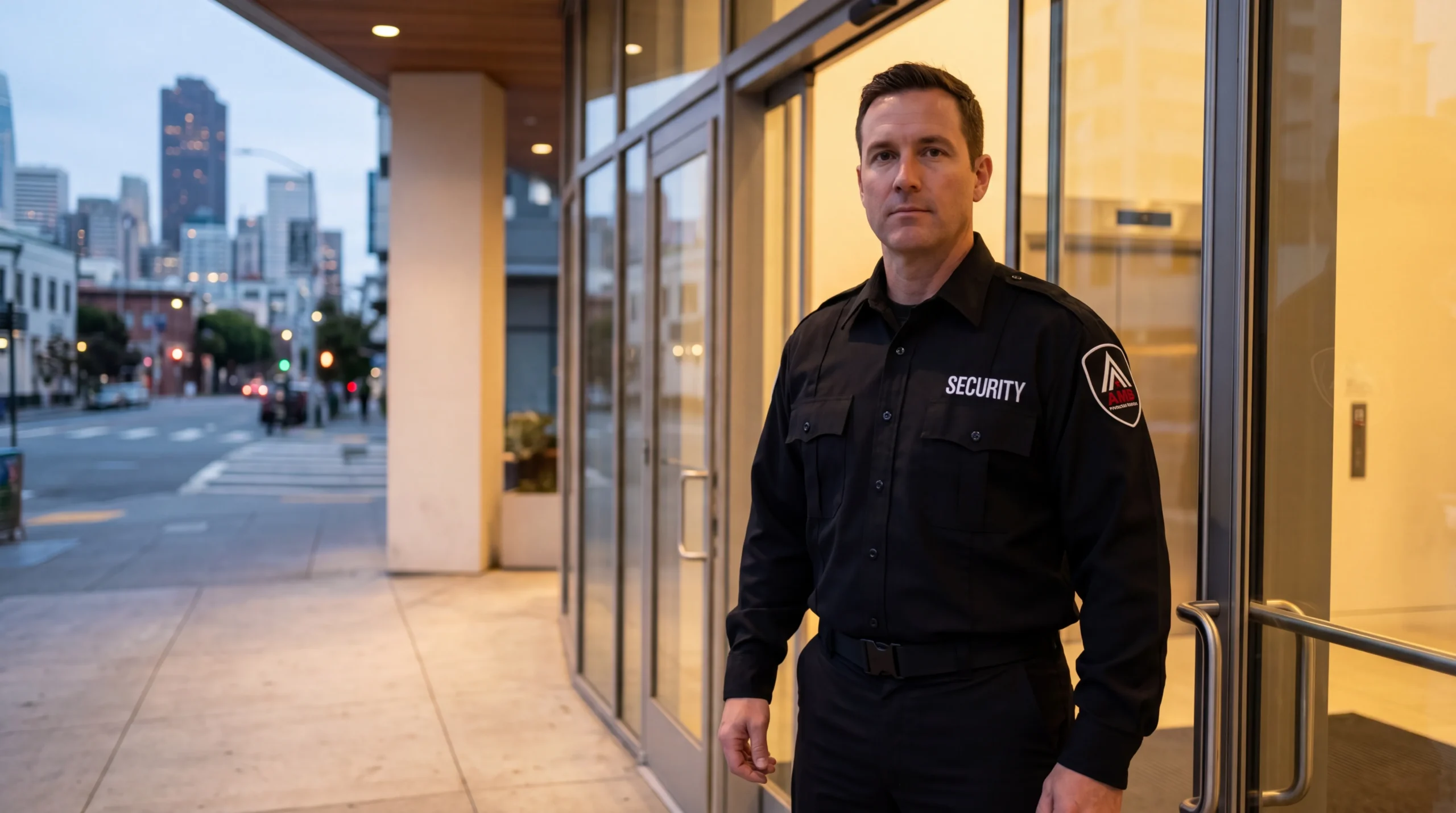
Cameras record. They do not intervene.
Camera systems are worth having and most properties should have them. What they cannot do is interrupt anything. A recording tells you what you lost and roughly when. It does not walk the perimeter, meet an arriving officer at the gate, escort a closing shift to their car, or start CPR.
The combination is what works: recording for evidence, a licensed person for the parts of the job that require judgement and a physical presence.
Why local knowledge is operational, not marketing
A patrol route is geometry. Units circulate between client sites and wait at points chosen because they sit roughly equidistant from a cluster of those sites and because a vehicle can actually park there. That is what makes a drive time predictable: if a unit is holding at a known point, the distance to your building is a known quantity.
A provider dispatching from a regional yard outside the city has none of that. Typical AMB response runs 15–30 minutes depending on the neighbourhood and time of day. Properties that need a guaranteed number do not use patrol at all — they use a standing post, an officer already on the property rather than en route to it.
What San Francisco specifically requires
Two local realities catch out-of-town providers. SFFD requires fire watch with continuous documented rounds whenever a sprinkler system is impaired or an alarm system is out, and the log has to hold up to inspection. And event work in a city this dense means coordination with SFPD and permit conditions that vary by venue and by block.
AMB officers are certified for fire watch posts and work to SFFD-compliant protocols; fire watch is deployed the same day, with the window confirmed on the call.
What a professional operation looks like from the inside
- California BSIS Private Patrol Operator licence #16681, active since 2010 — 16 years in business.
- $3,000,000 general liability, a $25,000 bond, and workers’ compensation covering every officer.
- 27 officers on roster, each cleared via LiveScan with annual re-verification.
- 40-hour onboarding plus monthly drills; CPR and AED certification renewed annually.
- Dash cameras on every vehicle, body cameras on every officer, footage kept 30 days.
- 24/7 dispatch answered by a person, not a queue.
Where AMB concentrates
AMB serves every San Francisco neighbourhood, and targets twelve of them — the downtown and business districts where commercial demand concentrates: Financial District, SoMa, Mission, Nob Hill, Pacific Heights, Marina, Castro, Hayes Valley, Mission Bay, Embarcadero, Dogpatch and Bayview. Each has a coverage page setting out what the police record actually shows there.
Start with the walk, not the quote
The useful first step is someone standing on your property looking at your entrances, your hours and your exposure. That walk takes 30 minutes, costs nothing, and produces a written quote within 48 hours. Call (415) 990-5001 or request a site assessment.