Mobile Patrol

Mobile Patrol vs Stationary Guards: SF Cost Comparison | AMB

25 min read
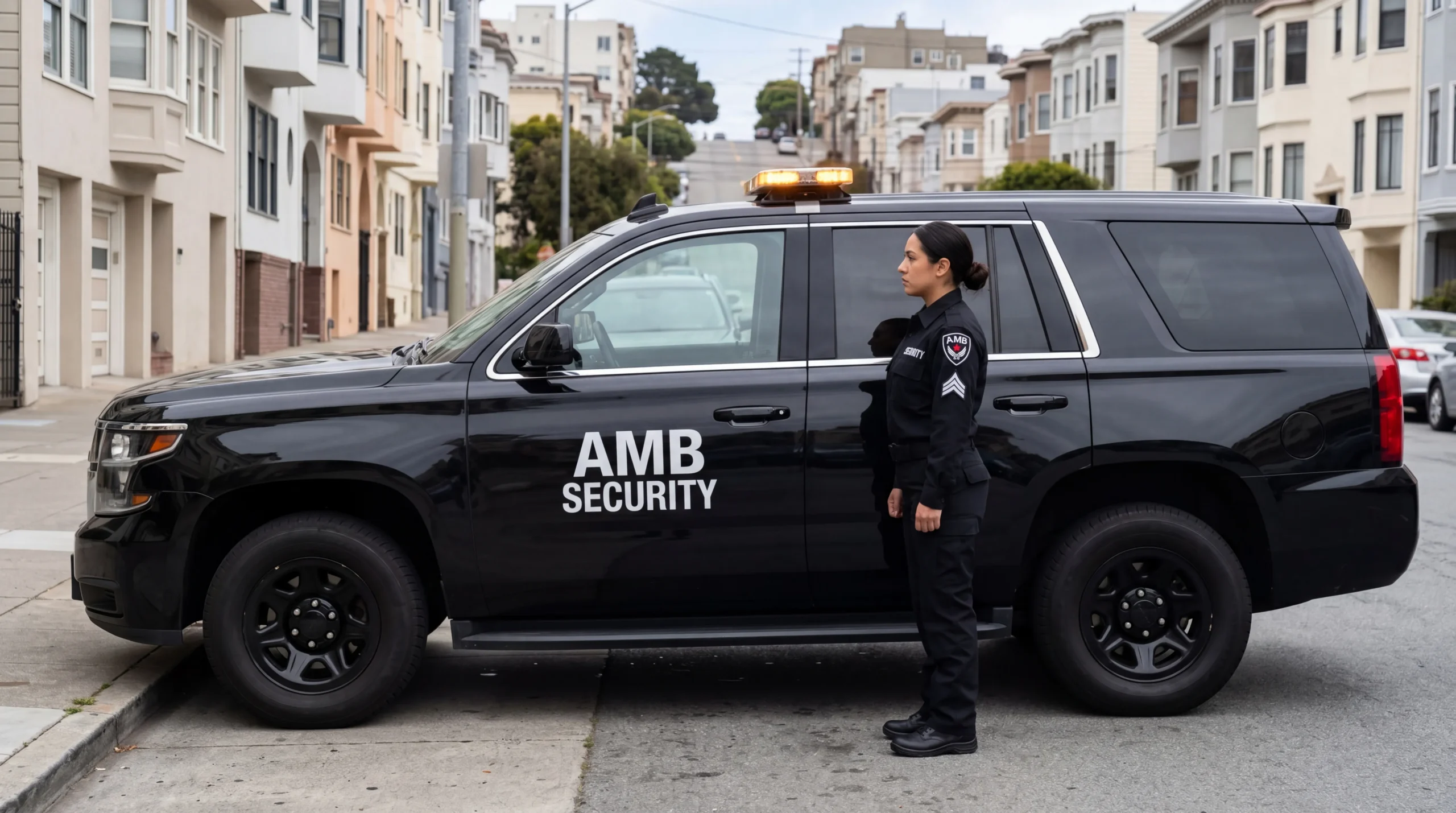
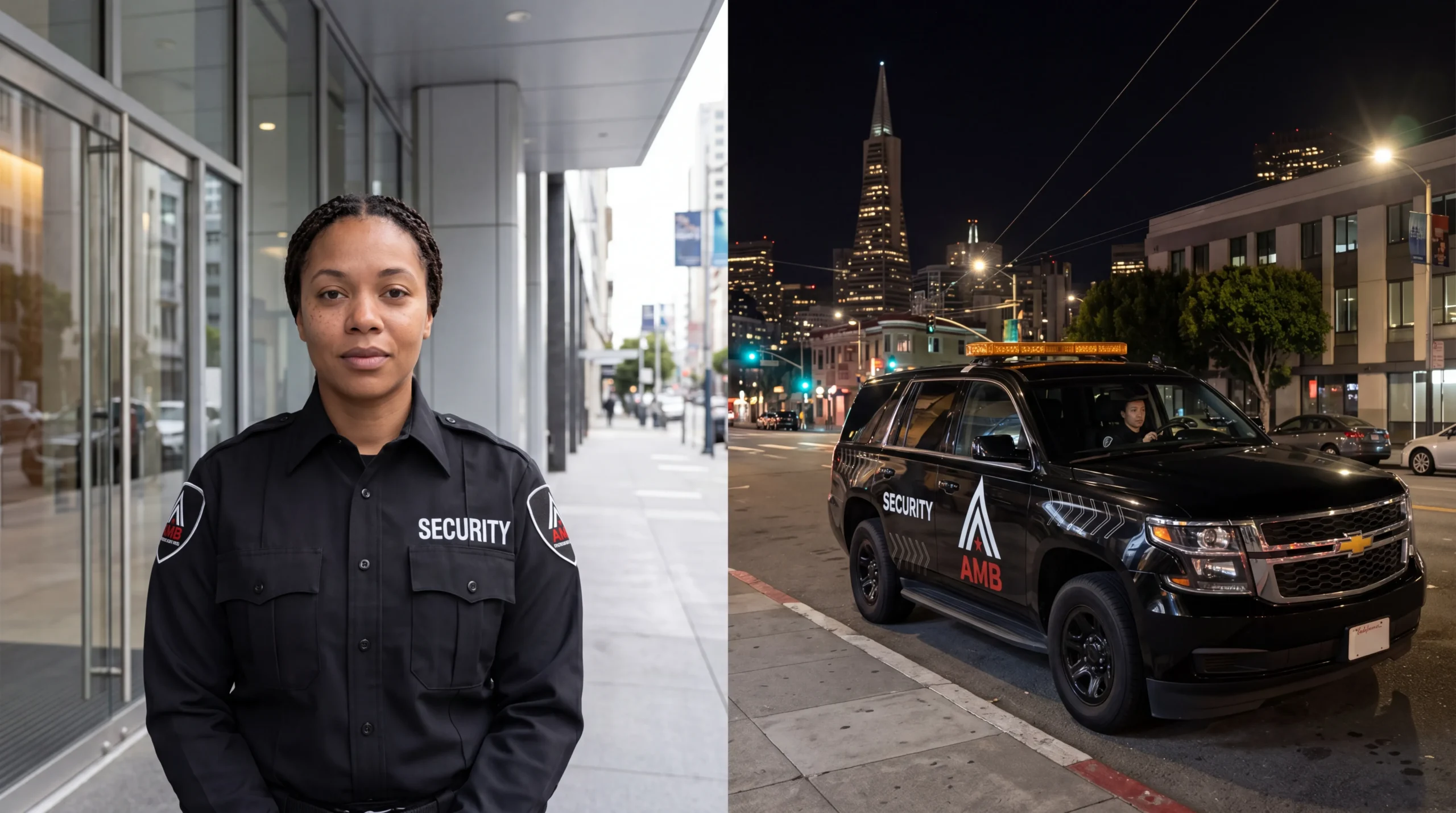
AMB stationary guard versus mobile patrol coverage comparison in San Francisco

Picking between mobile patrol vs stationary guards San Francisco coverage is the single biggest cost decision most San Francisco businesses make when planning a robust security program. Stationary guards can run $30–$55 per hour in SF, depending on the role and any specialized requirements. A well-designed mobile patrol contract, however, delivers comparable deterrence for 60–80% less when the use case fits. This comprehensive guide breaks down which security service fits which situation, offering real numbers and insights from current AMB Protective Services contracts to help you make an informed decision about your property protection needs in San Francisco.

What’s the Real Difference?

The fundamental distinction between mobile patrol vs stationary guards San Francisco lies in their approach to presence, response, and cost-effectiveness. Both are vital components of a layered security strategy, but they address different types of risks and operational requirements.

A stationary guard is a highly visible, dedicated officer assigned to a single location for a continuous shift — typically 4, 8, or 12 hours. These security guards perform a multitude of tasks: they control access points, meticulously log visitors, conduct internal foot patrols, respond immediately on-site to incidents, and maintain a constant, visible deterrent presence throughout their entire shift. Their primary strength lies in their unwavering, continuous presence, which is invaluable for sites requiring constant vigilance and immediate intervention.

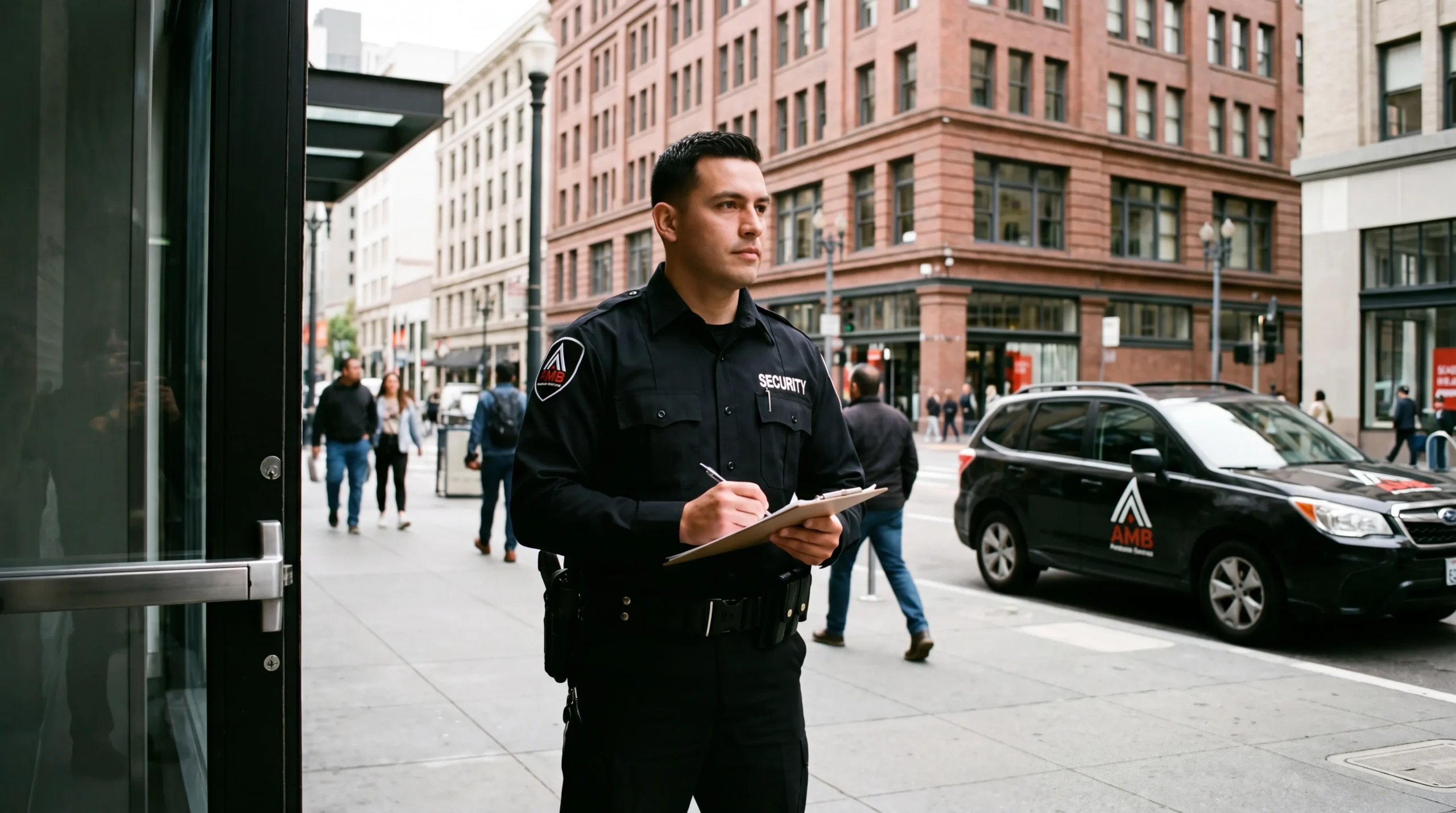
AMB stationary security guard greeting visitors at a San Francisco corporate building entrance

In contrast, a mobile patrol involves one or more security officers (or sometimes a pair for added safety) covering multiple sites within a defined geographic area, always in a clearly marked AMB Protective Services vehicle. These patrol security units visit each property on a randomized or scheduled rotation, performing physical checks, verifying perimeter integrity, and deterring opportunistic crime. Each stop generates a visible deterrent presence, and officers are also dispatched to respond to alarms across their designated route. Critically, every visit is thoroughly documented with GPS-stamped reports, providing irrefutable evidence of coverage and activity. This dynamic approach allows for cost-effective coverage across larger areas or multiple properties that don’t require continuous on-site staffing.

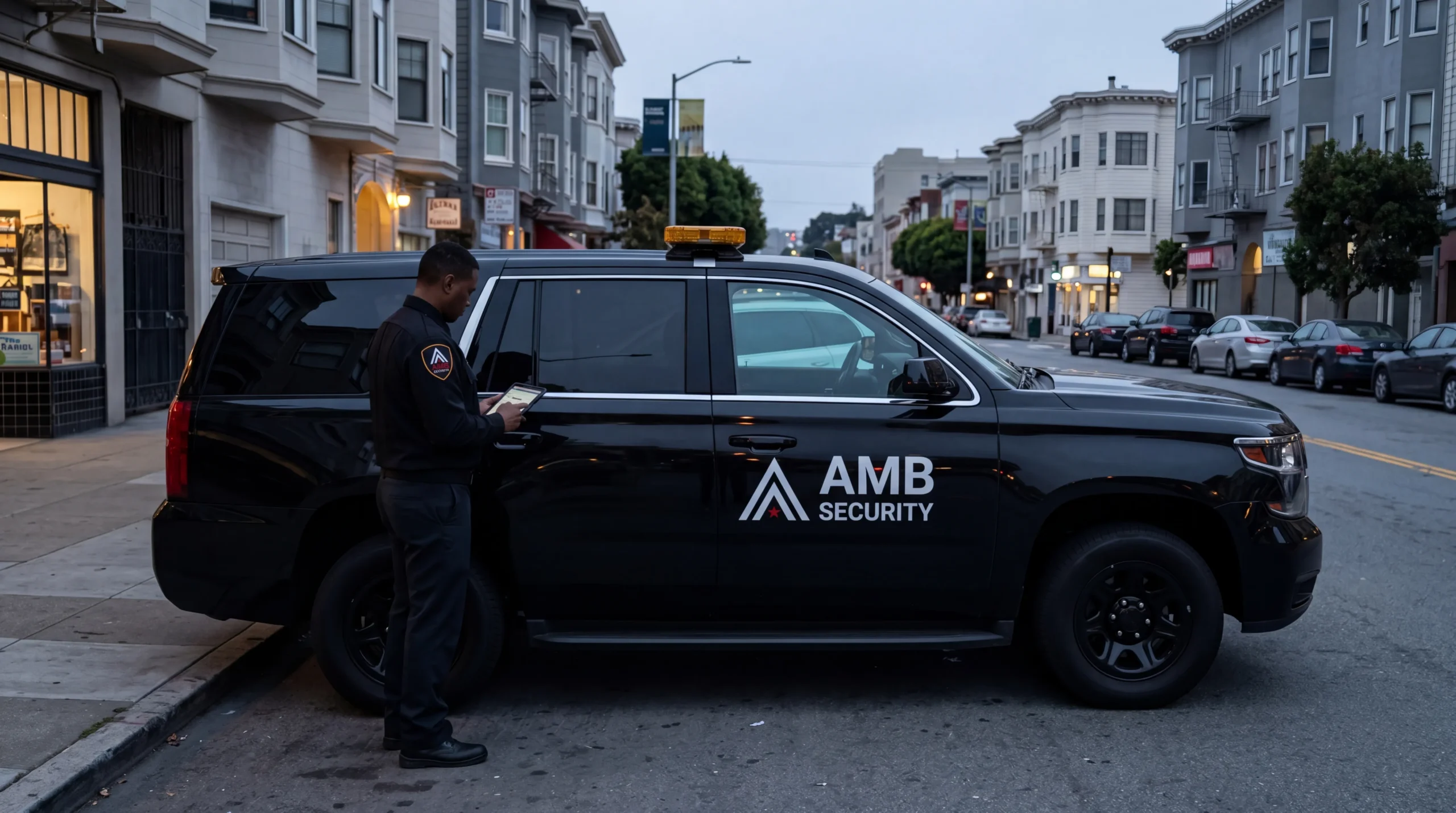
AMB mobile patrol vehicle driving through a San Francisco industrial park at dusk

The two security services are not interchangeable. Each solves different risk profiles and caters to distinct operational needs, making the choice between mobile patrol vs stationary guards San Francisco a strategic one for any business.

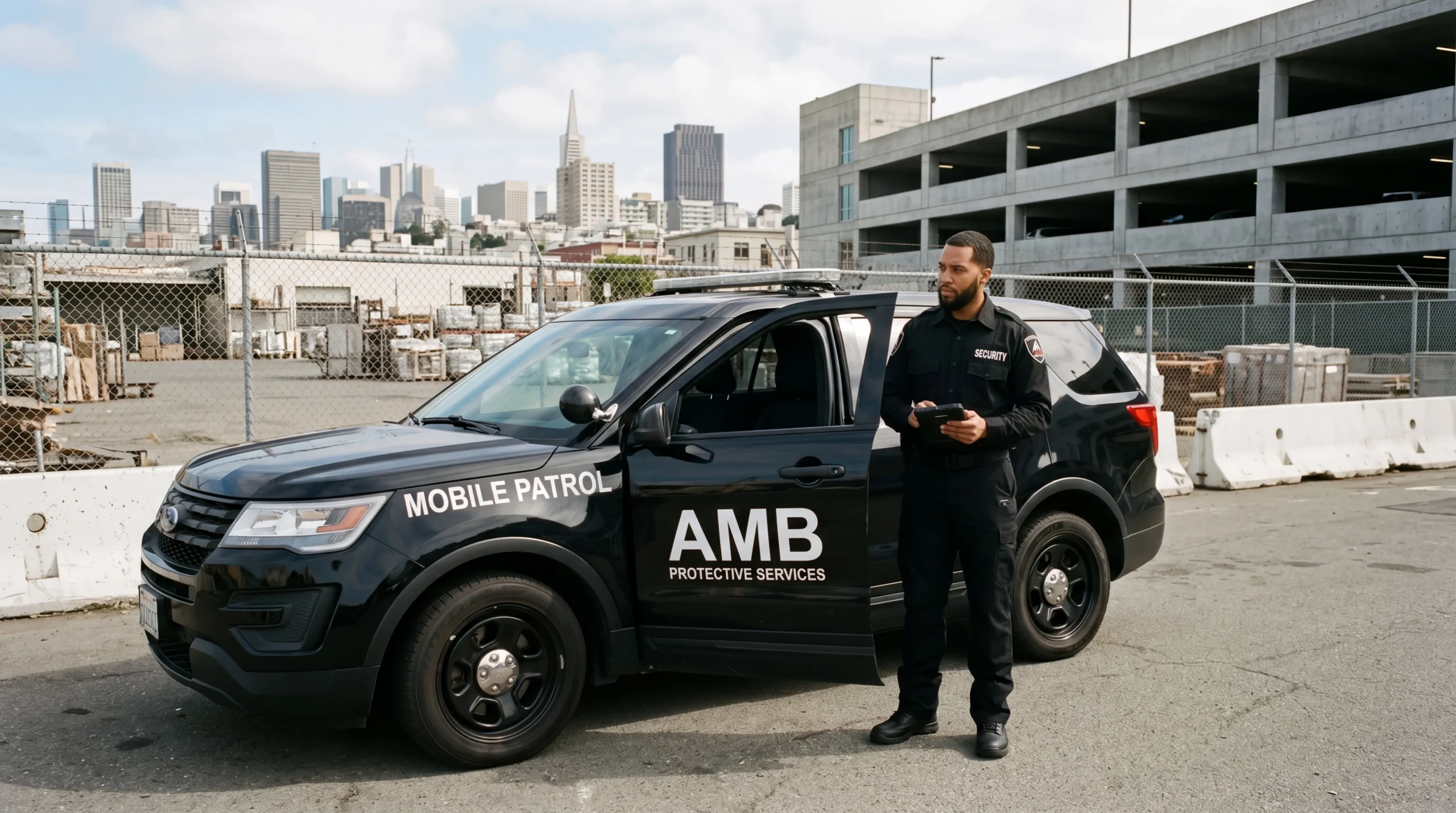
AMB mobile patrol officer checking a locked gate at a San Francisco commercial property

When Mobile Patrol Is the Right Answer

Mobile patrol security offers an exceptionally versatile and cost-effective solution for a variety of San Francisco businesses and property types. It works best when:

  • The site is unoccupied at night or during specific periods: This includes vacant commercial property, closed retail establishments, post-construction sites, or business parks after hours. A mobile patrol provides intermittent but highly visible checks, ensuring the property isn’t left vulnerable for extended periods. For example, a vacant lot awaiting development in SoMa, or a closed boutique in the Marina District, can benefit immensely from randomized night patrols.
  • Risk is opportunistic rather than targeted: Mobile patrols are highly effective against crimes of opportunity such as vandalism, graffiti, copper theft, catalytic converter theft from vehicles, or general trespass. The unpredictable nature of the patrol schedule makes it difficult for potential criminals to predict and exploit vulnerabilities. Consider a parking structure in Union Square or a light industrial yard in Bayview; regular, randomized patrol security visits can significantly reduce incidents.
  • The property is small to mid-size without complex access control needs: If your primary concern is perimeter security, visual deterrence, and alarm response rather than detailed visitor screening, mobile patrols are ideal. This includes standalone commercial units, smaller office buildings, or multi-tenant properties where individual tenants manage their own internal security.
  • Visible deterrence + verified evidence is the primary goal: The presence of a marked security vehicle and uniformed patrol security officer, even for brief periods, serves as a powerful deterrent. Coupled with GPS-stamped reports and photographic evidence of each check, businesses gain documented proof of their security measures, which can be crucial for insurance compliance and peace of mind.
  • You have multiple sites that can share a route: This is where mobile patrol truly shines for cost efficiency. Property management companies overseeing several commercial properties, or businesses with multiple satellite offices or storage areas across San Francisco, can bundle these locations onto a single patrol route. This allows for shared costs and maximum coverage for diverse areas.
  • Insurance requires documented patrols but not continuous presence: Many insurance policies offer reduced premiums or mandate documented security checks for unoccupied properties. Mobile patrol services provide precisely this, delivering verifiable reports without the expense of a 24/7 stationary guard.

Typical AMB mobile patrol customers in San Francisco include multi-property landlords with various commercial assets, construction site owners in rapidly developing areas like Mission Bay, retail centers after-hours in areas like Westfield SF Centre, dispensary back-of-house operations, light industrial yards in the Outer Mission, and standalone parking structures throughout the city.

AMB mobile patrol officer conducting a perimeter check around a San Francisco retail center

The Operational Mechanics and Benefits of Mobile Patrol Security in San Francisco

Understanding how mobile patrol security operates provides insight into its effectiveness. AMB Protective Services’ patrol security officers in San Francisco are highly trained individuals equipped to handle a range of situations.

How Mobile Patrol Works:

  1. Route Optimization: Patrol routes are meticulously planned to maximize efficiency and minimize response times across multiple commercial properties and areas. For larger portfolios, routes are dynamically adjusted based on risk assessments and client needs.
  2. Randomized Scheduling: While clients can request specific check-in times, a key deterrent factor of mobile patrol is its randomized schedule. This unpredictability makes it challenging for potential criminals to anticipate when the property will be vulnerable.
  3. Visible Deterrence: Our marked patrol vehicles are a strong visual deterrent. The sight of an AMB Protective Services vehicle is often enough to deter opportunistic crime, signaling that the property is actively monitored and protected.
  4. Physical Checks and Documentation: During each visit, our security guards conduct thorough physical checks of doors, windows, gates, and perimeters. Any anomalies, suspicious activity, or potential vulnerabilities are immediately noted, photographed, and logged into our digital reporting system. These reports include GPS timestamps, providing undeniable proof of service.
  5. Alarm Response: Mobile patrol officers are often the first responders to alarms at client sites. Their local presence and rapid deployment capability mean quicker response times than law enforcement in many instances, allowing for immediate assessment and mitigation of potential threats.
  6. Incident Reporting: Any incidents, from minor property damage to attempted break-ins, are documented with detailed reports, including observations, actions taken, and interactions with law enforcement.

AMB mobile patrol officer reviewing security footage on a tablet during a patrol stop

Key Benefits of Mobile Patrol in San Francisco:

  • Cost-Effectiveness: As highlighted, mobile patrol can be 60-80% more affordable than continuous stationary coverage, making it an excellent option for businesses needing a strong security presence without the overhead of 24/7 on-site guards.
  • Broad Coverage: One patrol officer can effectively cover multiple commercial properties spread across different areas of San Francisco, providing security solutions for a diverse portfolio.
  • Flexibility: Services can be easily scaled up or down based on seasonal needs, construction phases, or changing risk assessments for your property.
  • Rapid Response: While not continuous, mobile patrol officers provide significantly faster on-site response to alarms and incidents than relying solely on municipal police in many busy San Francisco districts.
  • Deterrence and Peace of Mind: The consistent, visible presence of patrol security reduces the likelihood of crime and offers business owners peace of mind that their assets are being monitored.
  • Detailed Documentation: Comprehensive reports with GPS data ensure transparency and provide verifiable records for insurance purposes or internal audits. This is a critical component for businesses seeking to demonstrate due diligence in their security efforts.

AMB mobile patrol vehicle with flashing lights responding to a late-night alarm in a commercial district

When Stationary Guards Are the Right Answer

Stationary security guards provide an unparalleled level of dedicated security and are essential for protecting specific types of San Francisco properties and operations. Stationary coverage is indispensable when:

  • The site is occupied and access control matters: For businesses with employees, customers, or sensitive information on-site, a stationary guard is crucial. They are responsible for visitor screening, badge checks, package screening, and maintaining a secure entry/exit point. Think of corporate campuses in the Financial District, healthcare facilities like UCSF, or prestigious hotels in Nob Hill.
  • Risk is persistent or targeted: When facing high-value inventory theft (e.g., jewelry stores, high-end art galleries), executive protection needs, or active threats, the continuous presence and immediate response capabilities of a stationary security guard are non-negotiable. For instance, a cannabis dispensary during operating hours requires a dedicated security guard for cash handling and customer safety.
  • You need continuous incident response capability: Unlike mobile patrol, which provides periodic checks and alarm response, a stationary guard offers immediate, on-site intervention. This is critical for situations demanding instant action, such as de-escalating disturbances, responding to medical emergencies, or directly confronting intruders. The “officer arrives in 15 min” scenario is often unacceptable here.
  • Regulatory or contractual requirements mandate continuous presence: Some federal sites, certain government contractors, or specific healthcare environments (e.g., psychiatric wards) have strict regulations mandating continuous security presence. A stationary guard fulfills these stringent compliance needs.
  • Customer-facing deterrence is part of the brand experience: For luxury retail stores in Union Square, high-end hotels, or corporate lobbies, a well-groomed, professional stationary security guard contributes to the desired brand image and customer experience, providing a sense of safety and exclusivity. They are often the first point of contact for visitors, embodying professionalism and vigilance.
  • On-site property management tasks are required: Beyond security, stationary guards can assist with various operational tasks, such as managing package deliveries, monitoring CCTV systems, or directing visitors, seamlessly integrating into the property’s daily operations.

AMB stationary security guard at San Francisco corporate building entrance

Typical AMB stationary customers in San Francisco include luxury hotels along the Embarcadero, hospitals and medical centers throughout the city, corporate campuses in South San Francisco, high-value jewelry stores, dispensaries during operating hours, and large event venues.

AMB stationary security guard monitoring CCTV and access control panels in a security office

The Indispensable Role of Stationary Security Guards in San Francisco

Stationary security guards are more than just a presence; they are an active, integral part of a property’s operational and safety framework. Their roles are diverse, demanding, and often highly specialized, especially in a dynamic city like San Francisco.

Core Functions of Stationary Security Guards:

  1. Access Control: This is often the primary duty. Guards manage entry and exit points, verify credentials, issue visitor passes, conduct bag checks, and ensure only authorized personnel access the property. This is vital for data centers, R&D facilities, and corporate headquarters.
  2. Deterrence: Their continuous, visible presence is a powerful deterrent against theft, vandalism, and unauthorized entry. A uniformed guard signals that the property is actively protected and monitored, discouraging potential criminals.
  3. Surveillance and Monitoring: Stationary guards often monitor CCTV cameras, alarm systems, and other security technologies. They are trained to identify suspicious activity, interpret alerts, and initiate appropriate responses.
  4. Incident Response: This is where stationary guards truly excel. They provide immediate, on-site response to security breaches, medical emergencies, fires, and other incidents, often before first responders arrive. Their quick action can mitigate damage, prevent escalation, and save lives.
  5. Patrolling and Observation: While “stationary,” these guards often conduct regular foot patrols within their designated property. This ensures all areas, including stairwells, restrooms, and less-trafficked zones, remain secure and free of hazards.
  6. Customer Service and Assistance: In many commercial and residential settings, security guards double as frontline customer service representatives, assisting visitors, providing directions, and answering inquiries, all while maintaining their security posture.
  7. Emergency Management: Guards are critical in implementing emergency protocols, including evacuations, lockdowns, and coordinating with emergency services during crises. They ensure the safety of occupants during critical events.

AMB stationary security guard conducting a thorough bag check at an event entrance in San Francisco

Specialized Applications in San Francisco:

  • Tech Campuses: Guarding sensitive intellectual property, controlling access to restricted labs, and ensuring employee safety in bustling corporate environments are paramount.
  • Healthcare Facilities: Ensuring the safety of patients and staff, managing distraught visitors, and securing valuable medical equipment in high-stress environments.
  • Retail Security: Preventing shoplifting, deterring organized retail crime, and providing a safe shopping environment for customers and staff in popular shopping districts.
  • Residential Buildings: Offering peace of mind to residents, managing visitor access, and deterring package theft in luxury apartment buildings and condominiums.
  • Government Buildings: Meeting strict federal and state security mandates, including sophisticated access control and monitoring.

AMB stationary security guard monitoring a bank of CCTV screens in a secure room

The choice between mobile patrol vs stationary guards San Francisco significantly impacts the level and type of security a business receives. For continuous, active protection and intricate access management, stationary guards are an indispensable asset, providing a bedrock of security for any property.

Cost Comparison: Real Numbers for San Francisco Businesses

The cost difference between mobile patrol vs stationary guards San Francisco is often the deciding factor for many businesses. Understanding these real numbers from AMB Protective Services contracts can help you budget effectively for your security needs.

Coverage Type SF Rate (per hour) Monthly Cost (Coverage Profile) Best For Key Considerations for SF Businesses
Stationary guard, unarmed $30–$45 $7,200–$10,800 (8hr × 30 days) Occupied sites, access control Ideal for corporate lobbies, retail stores (e.g., Union Square), or healthcare facilities requiring constant human presence and customer interaction.
Stationary guard, armed $50–$75 $12,000–$18,000 (8hr × 30 days) High-value or high-threat sites Essential for jewelry stores, cannabis dispensaries, banks, or executive protection, especially in areas with higher crime rates.
Mobile patrol (4 nightly checks) n/a (contract) $1,200–$2,800 Vacant + small commercial Great for small businesses, construction sites, or vacant properties (e.g., in Potrero Hill or Excelsior) needing periodic checks.
Mobile patrol (8 nightly checks) n/a (contract) $2,400–$4,200 Multi-site portfolios, higher risk vacant Recommended for property managers with several buildings or larger commercial property requiring more frequent security attention.
Mixed: day stationary + night mobile varies $5,500–$8,000 (example: 8hr day stationary + 4x night mobile) Hybrid coverage need A smart choice for most businesses in SF, offering robust daytime presence and cost-effective overnight security for commercial areas.

The cost gap between full stationary and mobile patrol is substantial, often 5–8x. For a site that genuinely doesn’t need continuous on-site presence—such as a construction site during non-working hours in Mission Bay, or a closed warehouse in Bayview—paying for stationary coverage is paying for unused capacity. Strategic deployment of mobile patrol security can provide comparable deterrence and response capabilities at a fraction of the cost, ensuring your security budget is optimized.

AMB security officer reviewing a budget spreadsheet with a client for security services

The Hybrid Model — Often the Right Answer for San Francisco

In practice, the optimal security fit for many San Francisco businesses is neither pure stationary security nor pure mobile patrol security. It’s a strategic hybrid model that leverages the strengths of both services, providing comprehensive security without overspending. This blend is especially relevant in San Francisco, given the city’s diverse commercial properties and varying security risks.

A typical hybrid model might look like this:

  • Day shift: Stationary guard at the main entrance (8 hours) – During business hours, when your property is occupied by employees, clients, or customers, a visible, professional stationary guard provides essential access control, visitor management, and immediate response capabilities. This is critical for businesses in busy areas like the Financial District or Union Square where first impressions and active security are paramount.
  • Night: Mobile patrol with 4–6 checks per night – Once your business closes and the property becomes unoccupied, a mobile patrol unit takes over. They conduct randomized or scheduled checks, providing visible deterrence, verifying the integrity of the perimeter, and responding to any alarms. This ensures active protection without the continuous expense of a stationary guard when there’s no one on-site.
  • 24/7: Alarm response on dispatch – Both stationary and mobile patrol services are backed by a rapid alarm response capability. If an alarm triggers at any time, an AMB security officer is dispatched immediately to investigate, ensuring quick action even if a patrol isn’t actively on-site at that exact moment.

This model gives you dedicated, continuous presence and access control when customers and staff are present, and verified deterrence plus rapid response when they’re not. Crucially, it achieves this at roughly half the cost of full-time 24/7 stationary coverage, offering an exceptional balance of security effectiveness and budgetary efficiency for your San Francisco property. This intelligent integration of mobile patrol vs stationary guards San Francisco allows for tailored protection, ensuring all areas of your commercial property are covered throughout the day and night.

AMB security team discussing a hybrid security plan for a San Francisco multi-use building

Strategic Security Planning for Commercial Properties and Diverse Areas in San Francisco

Effective security is not a one-size-fits-all solution, especially in a city as diverse as San Francisco. From the bustling commercial districts downtown to the industrial zones of Bayview and the quiet residential-commercial mixes in areas like West Portal, each property, business, and neighborhood presents unique security challenges. Strategic planning is crucial to deploy the right mix of mobile patrol vs stationary guards San Francisco to protect your assets.

Understanding Your Property and Its Environment:

  1. Location-Specific Risks: A commercial property in a high-traffic tourist area like Fisherman’s Wharf faces different risks (e.g., petty theft, public disturbances) than a tech office park in SoMa (e.g., intellectual property theft, corporate espionage, homelessness-related issues) or a warehouse in the Outer Mission (e.g., organized cargo theft, vandalism). Your security plan must account for these localized threats.
  2. Property Type: Is it a standalone building, a multi-tenant complex, a retail strip mall, a construction site, or a residential-commercial mixed-use building? Each type of property requires a tailored approach. A large commercial complex with multiple entry points might need several stationary guards during the day, while a smaller, single-tenant building might only need mobile patrol at night.
  3. Surrounding Areas: The security of your property is influenced by its surroundings. Proximity to public transportation hubs, parks, nightlife, or areas experiencing higher crime rates will inform the intensity and type of security services needed. For example, commercial areas bordering Tenderloin or parts of the Mission District might warrant a stronger, more visible security presence.
  4. Operational Hours: The transition from occupied to unoccupied hours is a critical vulnerability point. Strategic planning involves ensuring seamless security coverage during these changes, often through the hybrid model combining mobile patrol vs stationary guards San Francisco.

AMB security supervisor mapping out patrol routes on a San Francisco city map

Key Considerations for Planning:

  • Vulnerability Assessments: A professional security assessment identifies potential weaknesses in your current security infrastructure, from physical entry points to procedural gaps. This helps prioritize where to allocate security resources, whether it’s through enhanced patrol security or additional stationary guard posts.
  • Budget Allocation: Security is an investment, but it must be cost-effective. Strategic planning aims to maximize security impact within your budget, often by intelligently combining services to address the most pressing risks for each specific property.
  • Technology Integration: Modern security solutions go beyond guards. Integrating CCTV, alarm systems, access control systems, and even AI-powered analytics can amplify the effectiveness of both mobile patrol and stationary guards. For example, a stationary guard monitoring a sophisticated CCTV system can cover more ground virtually, while mobile patrol units can use live camera feeds to verify alarms before arrival.
  • Future-Proofing: San Francisco is a city of constant change. Your security plan should be flexible enough to adapt to evolving threats, property developments, or changes in business operations. This might mean scaling up mobile patrol frequency during peak seasons or adding a temporary stationary guard for special events.

AMB Protective Services specializes in developing these nuanced security plans for a wide array of commercial properties and diverse areas across San Francisco. Our approach ensures that your security investment is precisely matched to your unique needs, providing optimal protection through a well-considered blend of mobile patrol vs stationary guards San Francisco.

AMB security consultant discussing property security with a commercial building owner in San Francisco

How AMB Builds Your Coverage Plan

When a prospective client asks AMB Protective Services for a quote for their property in San Francisco, we never lead with a price. Instead, we initiate a thorough, no-cost site walk and comprehensive assessment to understand your unique security needs. Our goal is to provide a customized solution, whether it involves mobile patrol vs stationary guards San Francisco, or a sophisticated blend of both.

Our process ensures that every security recommendation is data-driven and tailored:

  1. In-depth Risk Assessment: We don’t just secure property; we secure against specific threats. Our experts conduct a detailed analysis to identify your actual loss vectors. Are you primarily concerned with opportunistic theft, vandalism, trespass, fire hazards, or liability issues? Do you operate in areas prone to specific types of crime, such as property break-ins in residential-commercial zones or shoplifting in retail corridors? Understanding these specific risks, whether they are common across San Francisco or unique to your location, is the first step in crafting an effective security strategy.
  2. Occupancy Mapping: We meticulously map when your site is actually occupied versus when it is empty. This is crucial for determining the most cost-effective and appropriate security coverage. For a San Francisco office building, for example, daytime occupancy might necessitate stationary guards for access control and visitor management, while night-time emptiness would be perfectly suited for responsive mobile patrol security.
  3. Insurance Requirements Review: We consult with you to understand your insurance carrier’s requirements. Many policies mandate specific security measures, such as documented patrols or continuous on-site security for certain assets or commercial properties. Our plans help you meet these requirements, potentially reducing premiums and ensuring compliance.
  4. Budget Alignment & Optimization: Security is an investment. We work with you to understand your realistic monthly spend. Our expertise allows us to optimize your budget by recommending the most impactful combination of mobile patrol vs stationary guards San Francisco, ensuring you receive maximum protection without unnecessary expenditure. We aim to find the sweet spot where robust security meets financial sensibility.
  5. Custom Service Mix Proposal: Based on the detailed assessment, we develop a tailored proposal that outlines the optimal mix of services: dedicated stationary guards, dynamic mobile patrol security, rapid alarm response, or a sophisticated blend of these. For example, a construction site in Mission Bay might benefit from robust mobile patrol at night combined with a daytime stationary guard overseeing material deliveries.
  6. Multiple Coverage Options: We typically present 2–3 options at different coverage levels. This allows you to clearly see how various combinations of mobile patrol vs stationary guards San Francisco can address your risks, giving you the flexibility to choose a service level that perfectly matches your actual needs and comfort level, rather than over-buying or under-buying security.

By following this comprehensive approach, AMB Protective Services ensures that your security plan is not just a reactive measure, but a proactive, intelligent strategy designed specifically for your San Francisco property and its unique challenges.

AMB security expert explaining a coverage plan on a diagram to a client

Advanced Technologies Enhancing Both Mobile and Stationary Security

In the modern security landscape, the effectiveness of both mobile patrol and stationary security guards is significantly amplified by the integration of advanced technology. AMB Protective Services leverages cutting-edge tools to provide superior protection for San Francisco properties, ensuring our security guards are equipped with the best resources available.

Technologies for Mobile Patrol Security:

  • GPS Tracking and Reporting: Every AMB mobile patrol vehicle and officer is equipped with GPS tracking, providing real-time location data and ensuring accountability. This technology allows for precise route optimization, verifies patrol patterns, and generates detailed reports with exact timestamps for each site visit. For commercial properties across diverse areas, this offers unparalleled transparency and proof of service.
  • Digital Reporting Systems: Our patrol security officers use handheld devices to generate comprehensive incident reports, log activities, and capture photographic evidence directly from the field. These digital reports are instantly accessible to clients, providing immediate insights into patrol activities and any incidents encountered.
  • High-Definition Dash Cams and Body Cams: For enhanced officer safety and evidentiary purposes, our mobile patrol vehicles are equipped with dash cameras, and officers wear body cameras. This footage is invaluable for incident review, de-escalation, and provides an impartial record of events.
  • Two-Way Communication Systems: Advanced radio and mobile communication systems ensure constant contact between patrol officers, dispatch, and backup units, facilitating rapid response and coordination during emergencies.

AMB mobile patrol officer using a tablet for digital reporting during a site check

Technologies for Stationary Security Guards:

  • CCTV and Video Surveillance Systems: Stationary guards often operate sophisticated CCTV networks, monitoring multiple areas of a property simultaneously. Modern systems include AI-powered analytics for anomaly detection, facial recognition, and license plate recognition, allowing guards to proactively identify and respond to threats.
  • Access Control Systems: Guards manage advanced access control systems, including keycard readers, biometric scanners, and turnstiles. These systems log all entry and exit, providing a detailed audit trail and significantly enhancing the security of restricted areas within commercial properties.
  • Visitor Management Systems: Digital visitor management systems streamline the check-in process, capture visitor data, print temporary badges, and manage visitor queues, freeing up stationary guards to focus on higher-level security tasks.
  • Integrated Alarm Monitoring: Stationary guards are typically linked to integrated alarm monitoring centers, allowing them to quickly identify the source of an alarm, assess the situation via CCTV, and dispatch appropriate resources or personnel.
  • Intrusion Detection Systems: Motion sensors, glass break detectors, and door/window contacts are integrated into comprehensive security systems, providing real-time alerts to stationary guards.

AMB stationary guard monitoring multiple screens in a state-of-the-art security command center

By strategically deploying these technologies, AMB Protective Services enhances the capabilities of both our mobile patrol and stationary security guards, providing a more robust, efficient, and intelligent security solution for all types of property in San Francisco. This technological edge ensures that whether you choose mobile patrol vs stationary guards San Francisco, you are receiving the highest level of protection available.

Common Mistakes San Francisco Businesses Make

Navigating the complexities of security in San Francisco can be challenging, and unfortunately, many businesses make common mistakes that compromise their protection and waste resources. Understanding these pitfalls can help you avoid them when deciding on mobile patrol vs stationary guards San Francisco.

  • Over-buying stationary coverage when nobody is on-site for 16 hours a day: This is perhaps the most frequent and costly mistake. For a commercial property or office building that is active only during business hours, paying for 24/7 stationary security guards means 16 hours of unused capacity. A hybrid model, or dedicated mobile patrol security for unoccupied periods, would provide comparable deterrence and response at a significantly lower cost, freeing up budget for other essential business needs.
  • Under-buying mobile patrol security thinking “two checks a night is enough”: While two checks are better than none, opportunistic theft and vandalism often occur between these infrequent visits. For effective deterrence, particularly in higher-risk areas or for valuable property, 4–8 visits per night is often the deterrent threshold. Anything less leaves significant windows of vulnerability that savvy criminals can exploit. The perceived cost saving often translates into actual losses.
  • Hiring the cheapest vendor without checking BSIS licensing, insurance, or response time data: In a competitive market like San Francisco, it’s tempting to go for the lowest bid. However, compromising on the quality and legitimacy of your security provider is a critical error. Always verify the company’s BSIS (Bureau of Security and Investigative Services) licensing (AMB PPO #16681), ensure they carry adequate liability insurance ($6M liability insured for AMB), and inquire about their average response times for alarms and incidents. Unlicensed or under-insured vendors expose your business to significant legal and financial risks.
  • Skipping documented patrol reports: Without GPS-stamped, detailed patrol reports, you lack verifiable proof of security activity. This is vital for insurance claims, demonstrating due diligence, and holding your security provider accountable. A reputable mobile patrol or stationary guard service will always provide robust reporting. This documentation is a key differentiator between professional security and informal arrangements.
  • Treating security as a fixed line item instead of revisiting the mix as occupancy and risk change: Your security needs are not static. A new construction phase, a change in business operations, or an increase in crime rates in your area of San Francisco all warrant a re-evaluation of your security plan. Failing to adapt means your security might become outdated, inefficient, or inadequate for current threats. Regular security audits and consultations with your provider are essential.
  • Failing to define clear protocols for security guards: Whether it’s mobile patrol or stationary, guards need clear, written post orders and protocols. Ambiguity can lead to inconsistent application of security policies, confusion during incidents, and potential liability issues. Ensure your security partner helps you develop and refine these crucial operational guidelines.
  • Ignoring the human element in security: While technology is important, the training, professionalism, and soft skills of security guards are paramount. A professional stationary guard, for instance, can de-escalate situations, provide excellent customer service, and adapt to unpredictable scenarios far better than any camera system. Overlooking the quality of personnel in favor of purely technical solutions is a mistake.

By being aware of these common missteps, San Francisco businesses can make more informed decisions when considering mobile patrol vs stationary guards San Francisco, ensuring a more effective and responsible security investment for their commercial property.

AMB security consultant pointing out a potential security vulnerability during a site walk in San Francisco

Conclusion

The decision between mobile patrol vs stationary guards San Francisco is a strategic one, not a simple choice between two interchangeable services. Each security solution solves different problems and offers distinct advantages. The right choice for your San Francisco property depends on a careful evaluation of its occupancy patterns, specific risk profile, insurance requirements, and your operational budget.

AMB Protective Services prides itself on building security plans that fit your precise needs. We understand that effective security is about intelligent deployment, not just presence. That’s why we always conduct a thorough, no-cost site walk and detailed assessment of your San Francisco property before providing any quotes. This ensures our proposal accurately reflects what you actually need to protect your assets, whether that’s the dynamic coverage of patrol security or the continuous presence of security guards, or an optimized hybrid model.

For a no-cost site walk and a customized coverage proposal that truly addresses your security challenges in San Francisco, contact AMB Protective Services at 415-990-5001. Our team is ready to help you navigate your options and implement the most effective security solution for your business.


This article is part of AMB’s coverage of mobile patrol security in San Francisco. See the full service page for pricing, coverage areas, and how to request a quote.

AMB Protective Services logo and contact information on a security vehicle
AMB Protective Services team conducting a security briefing in San Francisco
AMB mobile patrol officer patrolling a San Francisco street at night
AMB stationary security guard assisting a visitor at a San Francisco office building
AMB security personnel responding to an incident in a San Francisco commercial area
AMB mobile patrol vehicle parked in front of a San Francisco landmark
AMB stationary security guard conducting a security check at a San Francisco construction site
AMB mobile patrol officer communicating with dispatch via radio
AMB security team reviewing patrol reports on a tablet
AMB stationary security guard observing CCTV monitors
AMB mobile patrol vehicle with
AMB security guard assisting a distressed person in a public area of San Francisco
AMB security officer performing a perimeter check of a commercial building

Frequently Asked Questions

What are the benefits of mobile patrols in San Francisco?

Mobile patrols offer dynamic security coverage across multiple locations in San Francisco, making them particularly effective in neighborhoods like SoMa and the Financial District. AMB Protective Services typically conducts 2-8 GPS-verified visits per night, ensuring a visible security presence and prompt response to incidents. This flexibility can deter criminal activity as the patrols adapt their routes in real-time based on situational awareness, which stationary guards may not achieve.

How do stationary guards differ from mobile patrols in San Francisco?

Stationary guards provide a fixed security presence at a specific location, which is ideal for high-traffic areas like event venues or businesses in San Francisco’s Mission Bay. In contrast, mobile patrols can cover broader areas, responding to incidents at multiple locations, providing real-time surveillance, and deterring theft or vandalism through visible movement. This versatility can be beneficial for businesses needing round-the-clock coverage.

When should a business in San Francisco choose mobile patrol over stationary guards?

A business in San Francisco might opt for mobile patrol services when it requires flexible, comprehensive coverage across various locations, especially in dynamic neighborhoods like Castro or Hayes Valley. AMB Protective Services can provide mobile patrols that adapt to the needs and risks identified on-site, making them an excellent choice for businesses with multiple entrances or those that see fluctuating traffic levels throughout the day.

Can mobile patrols improve safety in San Francisco’s business districts?

Yes, mobile patrols can significantly improve safety in San Francisco’s business districts by providing active surveillance and quick incident response. AMB Protective Services typically engages in strategic GPS-verified visits that create a visual deterrent against crime, which is crucial in areas like the Embarcadero or Financial District where businesses are concentrated and require heightened vigilance.

What factors should a company consider when choosing between mobile patrols and stationary guards?

When deciding between mobile patrols and stationary guards, a company should consider its specific security needs, location dynamics, and monitoring requirements. For instance, businesses in high-traffic areas may benefit from stationary guards for ongoing presence, while those needing broader coverage may opt for mobile patrols with AMB Protective Services, which offers 24/7 dispatch and timely responses to alarms, ensuring compliance with local safety regulations.